Wednesday, September 17, 2014

Durham Sept 15-17

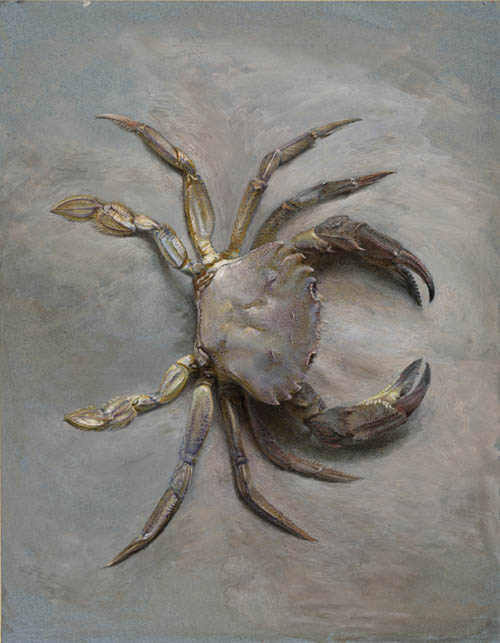
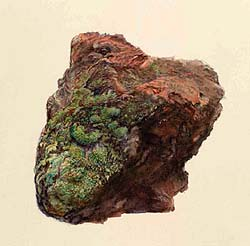
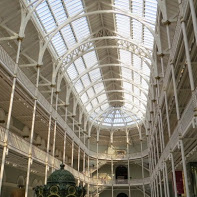
Adding from Edinburgh National Museum:

Zhan Wang, Stainless Steel Scholar's rock (2007)


Monday, Sept 15

     With the ceremonies over, we were able to visit the Cathedral as tourists.  Bruce was surprised when asked not to take pictures.  But there are plenty on line.

From the net, Cuthbert's shrine:


St. Cuthbert, alive and dead, played a important role in the church in England.  

Cuthbert was born in 633 in Melrose Scotland.  After years as a soldier,, he entered the Melrose monastery.  In time, he became master of a new monastery at Ripon.  Ripon followed the Roman rite while Cuthbert followed the Celtic, so he returned to Melrose and became prior there.

In 664 was the Synod of Whitby where the Celtic church adopted the Roman rite.  Cuthbert was sent to Lindisfarne , a major English monastery on an island off the coast, to implement the transition.  In 676, he retired to become a hermit.  He returned to active life as bishop of Landisfarne .  He died and was buried there.

In 698, his tomb was opened and his body found incorrupt.  Following this came miracles and pilgrims and canonization.

In 793 was the first Viking raid.  In devastated Landisfarne.  Raids continued.  In 875, the monks fled with Cuthbert's relics and the famous Landisfarne Gospels. In 883, after wandering from church to church, they settled into a church at Chester-le-Street.  When that church was threatened they moved to Ripon.

The myth is that returning to Chester-le-Street, the cart carrying the relics stopped dead and refused to move.  The bishop had a vision of St Cuthbert wanting to betaken to Dunholme.  Overhearing a conversation about a lost dun cow locating Dunholme, they turned the cart that way and it moved.  So they went to Dunholme which is Durham.  Alternatively, it is suggested that the Bishop had extensive church land that included Durham.  

It is noted also, that Durham is in a very good defensive position, almost surrounded by the River Wear.  

Successive churches went up around Cuthbert culminating in the cathedral we see today.

The Durham shrine of St Cuthbert was the most important pilgrimage site in England before the martyrdom of Thomas Beckett.

There  is a statue of monks wandering with  St. Cuthbert's relics now in front of library:


Durham is certainly one of the most imposing romanesque (or as the English term is, Norman) cathedrals.  Most of it was built by the Normans shortly after the conquest.  It is ponderous, dense, perhaps a bit intimidating.  Arguably, it shows why gothic style came along.  In fact, there are a few proto-gothic pointy arches.

The nave:


Compare to St. Denis, the first Gothic cathedral:


Exterior (no buttresses needed):


Durham Cathedral is also the burial place of the Venerable Bede, or at least part of him.


We remember Bede as the 7th-8th century author of The Ecclesiastical History of the English People.

On a lighter note, the Cathedral served as Hogwarts in the first two films.


Incidentally, we saw the mountains behind Hogwarts on out highland tour:


We had lunch in the Undercroft Cafeteria.  Quiche.  Ham & cheese sandwich.

Durham Castle is on the hill next to the Cathedral.  It dates back to the time when  the Cathedral was build (1070, et seq.) and has served as the first part of Durham University since 1832.

To be a university in GB, you need to have a charter from the crown and parliament. There were only two universities before Durham.  Today there are over 90.

Durham U. has strong ties to Japan.   There is a branch of Teikyo University on campus, the Lafcadio Hearn Culture Center.  (Hearn had an utterly fascinating life.  See, http://en.wikipedia.org/wiki/Lafcadio_Hearn ).

We ate meat pies from the local bakery in the room and drank our scotch for dinner.

***

Tuesday, September 16

There is a good Oriental Museum here.  It has a few very impressive contemporary Japanese ceramic objects:


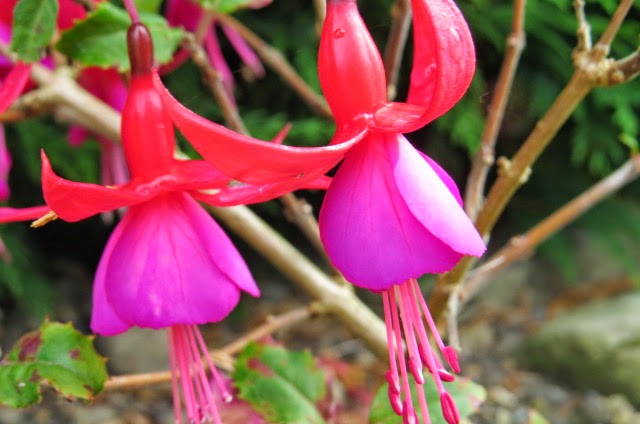
We also visited the nearby Botanic Garden.  Nothing extraordinary.  The fuchsia collection was in full bloom:

We had dinner at The Court, a local pub.   Shared country pate starter and crispy duck main.   Glasses of generic wine.  Quite acceptable dinner.

Sept. 17.  We took the train to Kings Cross and hired a car to the airport.  Stress free and cost effective.
   We are staying at the Radisson Blu so we could have dinner at Annayu, the Indian restaurant here.  We were pleased that we returned.  Scallops, lamb chops, dal, passion fruit posset, creme brulee, Argentine shiraz rose  (Callia alta)  and rioja (don Jacobo)..
 
 We leave for Sofia very early tomorrow to start our Road Scholar tours of Bulgaria and Romania on Friday.  We are hopeful that we will have wifi there.


Monday, September 15, 2014

Edinburgh Durham Sept. 12-14

Friday, Sept 12.


2 museums today.


We went to the Scottish National Portrait Museum to see a temporary exhibit of the drawings of John Ruskin.  Ruskin is more famed as an art critic than as an artist, so we were curious.  We learned that Ruskin and Turner were close friends.  Ruskin started drawing by copying pictures from a book Turner illustrated. 
 
 Ruskin gifted his drawings to Oxford and many of these works displayed were on loan from the Ashmolean Museum.

Some of the works were extreme in their fine detailing, like some Durers.  No photos allowed.  These are from the ‘net.


The last one is a study of a piece of brick.  Ruskin spent 60 hours on it.


We spent the rest of our day at the Scottish National Museum.  A big, bright building with highly varied exhibits. Each room had a theme and made a comprehensible whole.  But the placement of the rooms seemed to have no order.  What order the plan showed was from top to bottom, not contiguous.


Here are some novel items.


The Singh twins, 2 women who work from NYC, use traditional Mughal Court miniature techniques, applied to contemporary subjects.  This work, entitled The Laird of Lahore, seems to show a tea party.


The actual work is about 16" high.  Our photo (no tripod, no flash, 1/20th, ASA 1250), with 774K bits is linked here:

https://plus.google.com/u/0/photos/yourphotos?pid=6058246946486610354&oid=109870324287654031094

 
The detail is not humanly possible.

This is a detail (about 2") of the surface of ceramic piece is by Kando Takshiro, who was recently a student at the Edinburgh School of Art.  He used a precious metal (gold, silver, platinum)  glaze.:


From the Scotland wing:


Phoebe Traquair, a local artist, made this religious ensemble in the 1920s for a room in a new children’s hospital.  The room was designed for the parents of a dead child to grieve privately.


We took a late afternoon wine break and enjoyed the wonderful, clear sunshine.  This photo captures the low sun going through Leslie’s pinot noir and lighting Bruce’s white viognier.


We went to walk at the university.  A combination of Leslie’s sore feet and Blackwell’s stopped us.  Blackwell’s is an Oxford bookstore where Leslie had an account in her student days; it was the only place to find some classical stuff.


We had dinner at a pub, sharing a venison pie.


***
Sept 13, Saturday.  


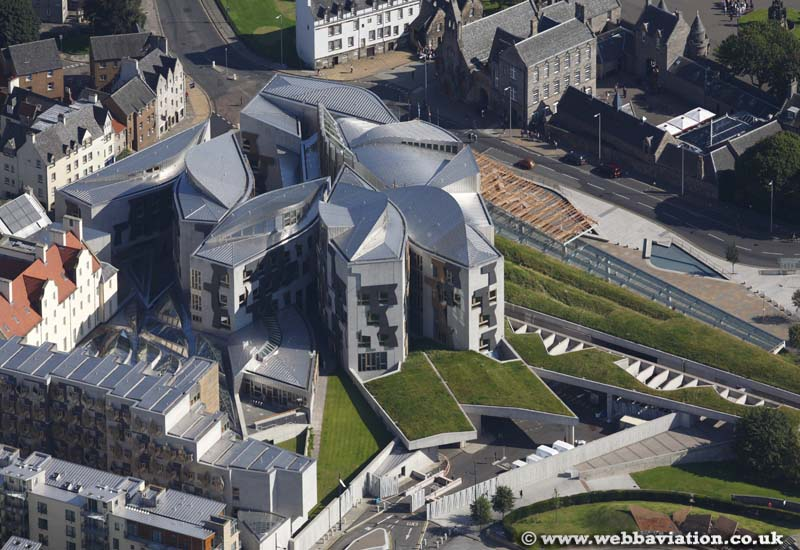
We took the tour of Scotland’s new parliament building, opened in 2004.   The architect was Enric Miralles.  The final cost was 400 million pounds, a ten-fold overrun.  In fairness, they ran into restoration issues at the attached, 17th century Queensbury House and had to revamp the security in light of 9/11.

The history of Scotland was embroidered on 100+ panels.  They call it a tapestry, but it is embroidered.  We were encouraged to add our stitch to the next panel:


The building uses many unique parts and reflects the Scottish penchant for ornamentation.  These photos from the ‘net; we forgot to bring the camera today. Various features are said to have symbolic meanings.  The parliamentary chamber and the committee rooms are completely set for broadcast.  The parliament is broadcast on line.


This is a good place to mention the upcoming referendum on Scottish independence.  The voters polls find more older people supporting a “yes” vote than younger people; men more than women.  Our inquiries come out even.  Too close to call.  

There was a long parade today by “no” supporters. 

 A banner, carried by many of the groups, stated “Proud to be British.  Proud to be Scottish.”  But we did not see a single bit of Scottish regalia or hear bagpipes.  We learned later that most of the marchers were from Northern Ireland. 


The voting will take place on the 18th.  Unfortunately, that’s when our prepaid tour of Bulgaria begins, so we will not be here for that.

We had lunch at the small cafe in the Parliament Building.  We split a haggis-and-bacon sandwich.   It was okay.


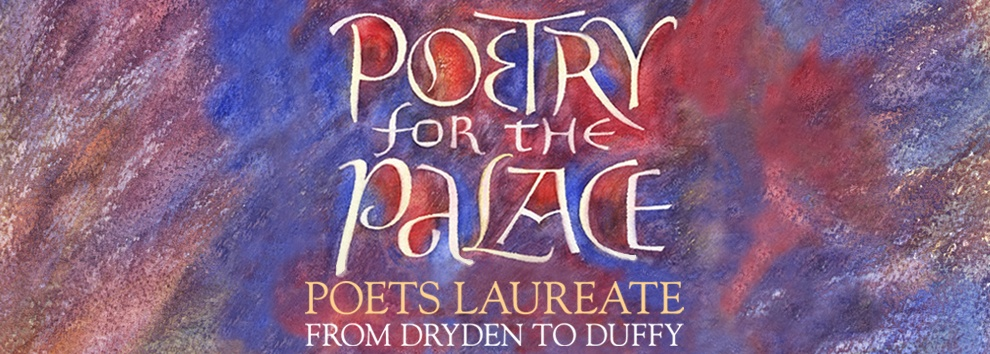
Across the street is the Holyrood Palace, where the British monarch spends part of her summers.  This is where Mary, Queen of Scots, was kept prisoner by Elizabeth I for 19 years.  As part of this visit, we saw an exhibition in the Queen's Gallery on British Poets Laureate called Poetry for the Palace.   Blurb at the entryway:


This exhibition celebrates the work of the current Poet Laureate, Carol Ann Duffy, at the half-way point in her laureateship.
It explores the role of the Poet Laureate, and the close relationship between poet and monarch over the last three and a half centuries. It brings together presentation volumes, original manuscripts, annotated collections of poetry and remarkable images of poets, including John Dryden, William Wordsworth, Alfred, Lord Tennyson, John Betjeman and Ted Hughes.
Carol Ann Duffy’s poetry is also represented by the work of the textual artist Stephen Raw, who has created several pieces for the exhibition.
Stephen Raw’s textual artistry looks like this:


***

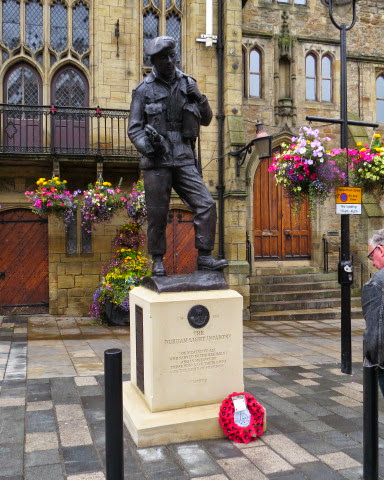
 September 13 Sunday We left warm, sunny Scotland for England, by train to Durham. Upon arrival we learned that there had just been a dedication of a new memorial to the Durham Light Infantry Brigade.


We missed the dedication, but were able to attend the memorial service held in the Cathedral.  The service was started with due pomp.  First, the mayor of Durham was escorted
in with his bodyguard. This was maybe seven men in cloaks and beret type hats
carrying ceremonial staffs and axes.  After the mayor was seated, everyone rose
as the Lord Lieutenant of the county was escorted in.  (On a semantic note, the
language is not tortured into neutrality. She is the Lord Lieutenant.)  Next was
the Bishop, with his cross banner carried before him. Then many clergy and
choir.  Finally, several regimental banners were presented.

During the service, the names of those who died in 1914 were read. There were, of course,
too many.


Friday, September 12, 2014

Glasgow -- Edinburgh; Sept. 7-11

9/7 

We took and all day trip to Inverness and back.  350 miles.  


9/8 Monday


   Burrell Collection Museum.

   William Burrell was a shipping and trading tycoon who collected eclectically.  He left his stuff to Glasgow in 1944 with funding for a museum building.  Bad timing.  It was finally opened in the 80s. The architects were Barry Gasson and Brit Anderson. They designed a space open to the outside with natural light.


Under the terms if the donation, the museum was required to replicate several rooms from Burrell's home.


Reflecting Burrell's good taste, this Ming cabinet:


Tang Dynasty horse with unusal pose:


An ichneumon (pharonic weasel):


The "Warwick Vase", from ancient Rome:


Next we went to the Tenement House


No photos inside. Tenement has a different meaning to our usage. It is merely an apartment building with no necessary connotation of slums. In fact, this one was middle class. It consisted of a parlor, bedroom, kitchen and bathroom. Of interest were the closet beds, just what they sound like spaces the size of beds with beds. I compare the American Murphy bed.


More Charles Rennie Mcintosh:


Macintosh’s career took off when he won an anonymous contest to design a new school of art building.  The building suffered very bad fire damage in April...


... so you cannot visit the library, which is considered the main attraction.  We had a student take us around the neighborhood for an hour. Details from the school building:


Macintosh left us several tea rooms. We had tea at this one, of which he and his wife designed all aspects.


These chairs were more comfortable than the others we tried the other day.


Sept 9, Tues.


We spent the first part of the day at the Kelvingrove Museum.  It’s is a pompous, but still beautiful Victorian Building.


The museum’s painting collection has one masterpiece, Dali’s Chirst of St. John on the Cross.   They've made a separate room for it.


After the painting was badly damaged by a madman in then 60s, the Museum has added protective glass or plastic.  The reflections seriously detract from the impact of the work. There was an informative film about the restoration.


We caught a train to Edinburgh, about an hour away. Edinburgh has been warm and sunny for almost the entire time we have been here.


We had dinner at Ghurka, an excellent Indian restaurant: momo, dal, butter chicken.


Sept 10  Wed.

Today we went to the Scottish National Gallery.  It if fairly small, but full of many marvelous works: 

Bruce liked this Pissaro a lot more than Leslie:


She preferred Cezanne's Big Trees


Orchard in Blossom, van Gogh:


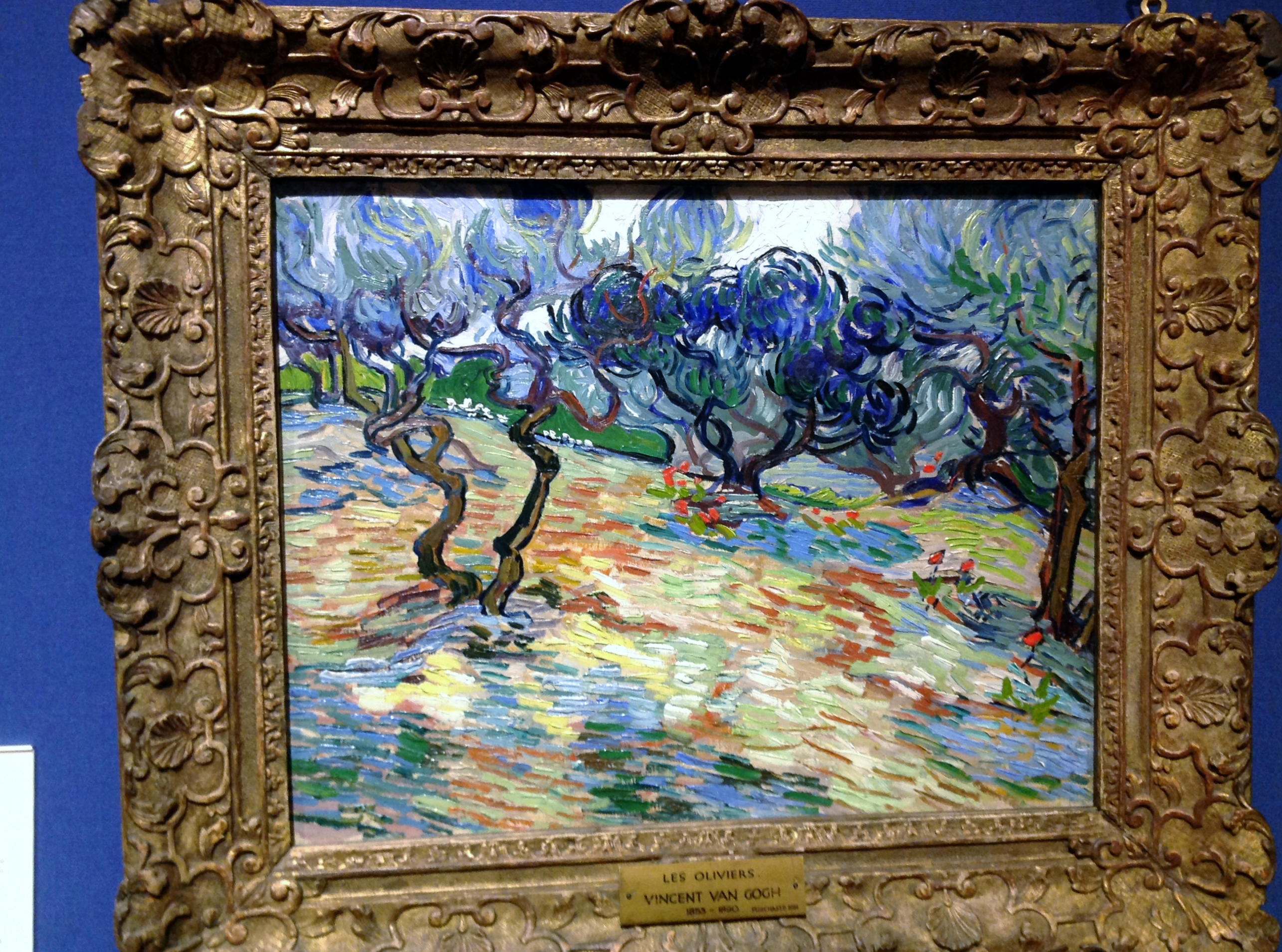
The knock you over Van Gogh Olive Trees:


A really early Seascape by Monet (1864)


Young Viola Player, Gerrit Dou:


We learned about the UK "acceptance in lieu scheme"' whereby the Government accepts artwork in lieu of inheritance taxes.  The artwork is then allocated to museums by some sort of bidding process anmongst the public museums.

We learned a new art term today:  "bodycolor" is any type of opaque watercolor.  Today the term gouache is often used.  

Sept. 11.  Thurs.

After leaving our ailing computer at the shop, we went to the Castle.  ( of course, the camera chip stayed in the computer, so no pictures today, perhaps none needed.)  In addition to being a castle, there are three war museums.  There we learned that the Scots fought and are proud of it.  They fought each other. They fought the English.  Then they joined with the English and fought the rest of the world.  In the two world wars, the Scots lost a disproportionate number of men.

We are reminded that this this is the 100th anniversary of the beginning of World War I.  Both here and in England, we see many poppy wreaths.  We associate poppies with World War I.  Here they seem to be for veterans of all wars.

Perhaps this was a good day to be honoring veterans.

We stopped at St Giles Cathedral.  We were not so impressed with the cathedral. It is in origin, of course, Roman Catholic, but now serves as the main Presbyterian church of Edinburgh and is considered the "mother church" of that form of Protestantism.   Unlike in Holland, this cathedral was not stripped, but remains visually a Catholic cathedral (except, of course, no crucifix).  St Giles was a 7th century hermit in France.  He was hit by an arrow intended for a stag.  Hospitals for the poor and lepers are dedicated to him.  

Dinner at the Abbottsford, a good pub. Three kinds of sausage (pork, beef, lamb) and mash, cheese plate.